Tuesday, March 30, 2010

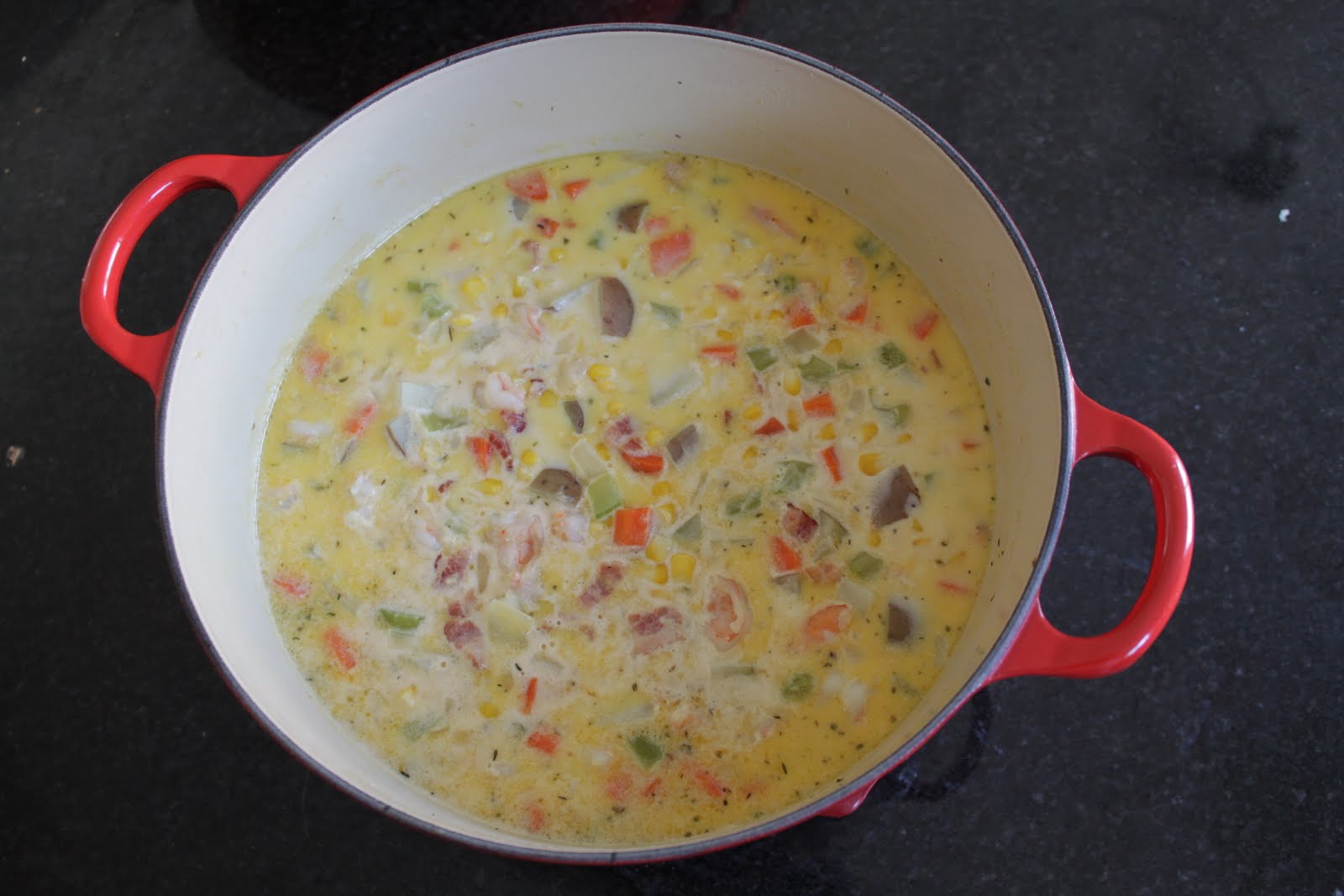
Shrimp Corn Chowder


I found a shrimp corn chowder recipe in this (next) month's issue of Real Simple. It looked fine but it didn't look quite as good as my trusty lobster corn chowder recipe from Williams-Sonoma. The recipe can be found on the Williams-Sonoma site.

This chowder ideally should be made at the height of summer when both corn and lobsters are plentiful but I did not want to wait for summer so I decided to make a few substitutions to the original recipe. I used frozen sweet corn kernels and shrimp instead of the ears of corn and lobster. The chowder still tasted pretty good without the corn cobs and lobster. I made the stock using homemade chicken stock, shrimp shells and the legs from the lobster I bought for the curry.

I served it with a nice crusty sourdough.


Sunday, March 28, 2010

Lobster in Prik Khing Curry


I don’t know why but I’ve been craving lobster all week. March is not a great time for craving lobster because it ain’t lobster season and I do try to eat what is in season. (I’m eating tons of citrus right now.) Although it is not lobster season, you can still get lobster pretty much all year round at the Asian store. I was not disappointed. They had a tank full of live lobsters. I paid $10.98 a pound. Not the cheapest but not too bad. I asked the guy for one of the larger ones. It was just over two pounds.

Initially, I was planning on making ginger scallion lobster but I wasn’t up for the deep frying part so I decided to cook the lobster in a Thai curry sauce. It is my favorite way to cook crab so I figured it should work well with the lobster. I’m not too fond of the typical steamed and served with clarified butter route. I don’t usually order lobster at American restaurants because they are often prepared this way but I took the bf out for his birthday dinner and ended up adding a rock lobster tail to my entrĂ©e.


Lobster in Prik Khing Curry:
2 ¼ lb lobster
2 tablespoons canola oil
2 ounces prik khing curry paste(half of the small can)
2 cloves garlic, minced
½ onion, sliced
7 ounces coconut milk (half can)
2 kaffir lime leaves, torn into smaller pieces
1 stalk lemon grass, cut into 2 inch pieces and smashed
MSG, to taste
Fish sauce, to taste
1 tablespoon granulated sugar
½ red bell pepper, sliced
1 egg
handful cilantro, roughly chopped
handful Thai basil leaves
5 stalks green onion, cut into 1 inch pieces


Mise en Place:
1. Cut lobster into 12 pieces. Using a heavy cleaver cut the body into four pieces, the tail into two, and the claws into three pieces each. Crack each piece.
2. Prep all vegetables.

Directions:
1. Heat oil in a large wok. Add prik khing paste; fry until fragrant. Add garlic and onions; continue to cook until onions are soft. Add coconut milk; fry until fragrant. Add lime leaves, lemon grass, MSG, fish sauce and sugar. Simmer for a few minutes.
2. Add lobster pieces, red bell peppers and egg. Toss to coat lobster with sauce. (Add a little water if the bottom of the pan is scorching.)
3. Cover and cook until lobster is red. Turn off heat, add cilantro, basil, and green onions.

Say hello to Lenny the lobster. I have been trained to quickly and humanely kill lobsters but every time I do it, I still freak out. It's really hard to kill a living thing. Lenny was very much alive and active when I took him/her out of the fridge. I stored the lobster in a paperbag and covered the gills with strips of wet newspaper. I was sure the lobster would die in the fridge. It flopped its way on the counter and even sent the spice container across the room.


I chose Prik Khing Curry Paste but any Thai curry paste will work. The dark green stuff in the lobster body is called the tomalley. The tomalley is considered a delicacy but recent reports show high levels of toxins and pollutants in the tomalley of lobsters from the Maine/New England areas.


Veggies are prepped and the lobster has been hacked into small pieces and the the claws have been pre-cracked.


Cooking method in photos:


I know I've been MIA lately. Many food lovers go through blah periods, where nothing tastes good. I haven't been craving anything until the lobster. I cooked regular (uninspiring and unblog-worthy) meals.

Dinner at Oceanaire Restaurant. I ordered the mahi mahi and I debated between getting it Oscar style or adding a lobster tail. The lobster tail won. The bf ordered salmon. We "shared" the fried green beans with the aoli. I ate two bites of the fish and ended up giving most of it to the bf. I filled up on the yummy sour dough bread.


Here's a picture of baby Jack's first birthday birthday cake. It was Hungry Hungry Caterpillar theme.


And the birthday boy after enjoying the green frosting from his cupcake.


Saturday, March 27, 2010

Challah French Toast


My favorite bread for french toast is challah (my second favorite is brioche). Whenever I find challah french toast on the menu of a hip breakfast joint, I always have to order it. I think I make a pretty darn good french toast. (I used the same recipe but with a soft french baguette during out snow trip earlier this year. I ended up feeding 30 adults plus several children.)

2 tablespoons flour
1/2 cup milk
pinch salt
1 extra large egg
1/4 teaspoon ground cinnamon
1/2 teaspoon vanilla extract
1 teaspoon brown sugar
6 thick slices challah bread

1. Mix all ingredients (except bread) together. Whisk together.
2. Heat a skillet or griddle. Coat with butter and oil. Dip each slice of bread in mixture and fry each side until golden brown.


I usually buy my challah at the Whole Foods in Cherry Creek. They usually carry the braided loaf most of the year and the braided crown around Rosh Hashanah.

Thursday, March 18, 2010

Chinese Sesame Balls (Jin Dui or Jien Duy)


I've been feeling a little tired and uninspired lately. However, I did manage to do some cooking over the weekend. I had leftover adzuki beans from a different recipe and decided on the sesame balls instead of red bean dessert soup. I used dried adzuki beans to make the red bean paste. (This took a very long time.)

The recipe can be found here. These sesame balls are very similar to those found at dim sum restaurants. (I also like the Vietnamese version called bĂ¡nh cam or bĂ¡nh rĂ¡m. The Vietnamese version is usually filled with sweetened mung bean paste.)

The pictures are not the best. The sesame balls happen to be one of the last items I cooked. It was already dark by the time I started the recipe. (It was cloudy most of the day so even the pictures I took during the day were crappy.)

The dough is slightly tan because of the dark brown sugar. The recipe calls for glutinous rice flour. If you buy a Thai brand, then it's the bag with the green writing. I always get confused between the red and the green writing. Green = Glutinous rice and Red = Regular rice. The red bean paste was made from dried adzuki beans, sugar and a pinch of salt.


Wednesday, March 03, 2010

Napa Cabbage Soup


My mom made this really simple soup when I was home a few weeks ago. She bought about fifty pounds of napa cabbage because she found a great deal on it (5 pounds for $1). When I returned to Denver, I sent the bf to get some napa cabbage from the store.


Chicken (Use bone-in chicken for more flavor. I used drumsticks.)
Napa cabbage, sliced
green onions, sliced
ginger, cut into matchsticks
salt
MSG
fish sauce

Method:
Simmer chicken in a medium pan. Add the rest of the ingredients. (I'm sorry. It's not much of a recipe.)

Friday, February 26, 2010

Enstrom’s Style Almond Toffee with Matzah


I made Enstrom’s style almond toffee but with a matzah cracker base. I should call it “Enstrom’s Gone Jewish Almond Toffee.” I started off making Enstrom’s almond toffee but then I remembered my 7th grade home ec teacher used to make a shortcut toffee with saltine crackers and melted toffee and chocolate chips. I didn’t have any saltines but I did have a case of matzah crackers. Matzah crackers are great because they are thinner and crispier than saltines.

The toffee was a hit but we hardly made a dent so I packed it up and took it to work. I had to get the yummy toffee out of the house. Every time I sat down, I had a small piece in my hands. The toffee disappear in a matter of hours. I even got a request for the recipe. You know when something is good when someone asks you for the recipe.

Enstrom’s Style Almond Toffee with Matzah

1 pound salted butter
1 ½ teaspoons salt
2 ¾ cup granulated sugar
¼ cup water
1 ½ cup whole almonds
3 to 4 matzah crackers
12 ounces chocolate chips

1. Heat a 3 to 5 quart heavy bottom pan over medium heat. Add the butter and to melt slowly. Add the salt. Add the sugar and the water. Stir slowly with a wooden spoon.

2. Continue to cook about 7 minutes. The water will evaporate and the sugar will slowly melt and combine with the butter. Add the almonds.

3. Continue to slowly stir the mixture for about 10 to 15 minutes or until it reaches the hard crack stage (about 290 degrees F on a candy thermometer). The sugar will turn a dark caramel color. (Do not undercook the sugar or you will get chewy toffee. Don’t overcook the toffee or you’ll end up with burnt sugar.)

4. While the toffee is cooking, prep a half sheet pan and line with foil or a silpat or both. Lay the matzah crackers on the lined sheet pan. You will have to break the crackers and piece them together. Put the sheet pan on trivets or cooling rack to protect your counter from the heat of the toffee.

5. One the toffee mixture has reached 290 degrees; pour it over the matzah cracker and spread to evenly coat.

6. Sprinkle the toffee evenly with chocolate chips and let sit about five minutes (or until chips are shiny) and then spread the melted chips to evenly coat the toffee.

7. This is optional but you can also sprinkle some sliced almonds (or crushed powdered almonds like they do at Enstrom’s) on the chocolate layer.

8. Allow toffee and chocolate to cool completely and then break into smaller pieces.


I used mini chocolate chips.


Sunday, February 21, 2010

Goi Cuon (Vietnamese Spring Rolls) with Peanut Hoisin Sauce


My friend made Goi Cuon (or Vietnamese Spring Rolls) for the baby shower the other weekend. I was amazed by the way she rolled them. She is a master goi cuon roller. They looked so professional. It is not surprising because her family owned/owns several restaurants and they make some of the best goi cuons in San Diego.

I watched her roll them the morning of the shower. She used 1½ skins for each roll. She had a stack of very large round skins and a stack skins that were cut in half. I asked her why she had the half circles. She told me that it is trick used to help the rolls stay fresh for several hours. The trick worked.

There is quite a bit of prep work that goes into making these rolls. It is an exercise in mise en place. Once everything is prepped, you can either roll them all or wait for your friends to come and everyone can roll their own. Rolling spring rolls is another exercise of self-control and moderation. One must possess enough self control to not over-stuff the rolls. It is tempting to want to jam-pack all the yummy ingredients in the roll but one must remember that we are making spring rolls and not burritos.

Ingredients for 20 large rolls:
30 extra large shrimp
1 pork loin, poached, and cut into thin slices (I don’t like pork in mine.)
1 head Green leaf lettuce, washed and torn into pieces
1 bunch cilantro
1 bunch mint, leaves only
2-3 cups bean sprouts
1/2 package vermicelli rice noodles
green onions or chives (I think this is optional. It makes the rolls pretty but I always pull it out before eating.
30 large rice paper wrappers

Mise en Place:

1. Shrimp – Put shrimp (with shells on) in a medium saucepan and cover with water. Add about 1 teaspoon sugar, 1 teaspoons vinegar and 2 teaspoons salt. Boil until pink. Drain and allow to cool. Once shrimp is cool, carefully remove the shells. (Also devein them. I buy already deveined shrimp.)
2. Poach pork loin, cool and then slice.
3. Mix lettuce, cilantro, mint and bean sprout. Wash and drain.
4. Boil vermicelli noodles.

Vermicelli Rice Noodles:


After cutting the shrimp, I arrange them to make it easier to use the same side shrimp for each roll.


I watched my friend roll them but I couldn’t remember so I emailed her. She responded using her phone. Her response is below.

"I cut the wrapper in half dry with scissors

place half sheet in middle of whole sheet, hold together and then wet

I always use the larger wrappers with the three girls on it (my fav wrapper it's hole proof lol)

I like all my veggie and meat on the edge close to me like 1/4 the ways up then line shrimp in front of veggie pile

roll bottom wrapper over pile just enough to enclose stuffing then sides one by one and finish rolling up

if it's unclear call me"


I'll do the assembly instructions using photos. (This is my interpretation of my friend's method. It is not her method.)

1. Count 10 wrappers and cut them in half. (You will need a total of 30 wrappers to make 20 rolls.)


2. Hold the half skin in front of the whole skin and dunk in warm water.


3. Place on large plate.


4. Arrange veggies and noodles centered on lower edge of skin. (This is also the time to add the sliced pork loin, if using.)


5. Roll up and arrange the shrimp pieces.


6. Fold the edges.


7. Tightly roll.


Peanut Hoisin Dipping Sauce


This is not my friend's recipe for peanut hoisin sauce. I got this recipe from an old coworker named Daisy. It is so yummy. I think some of my friends use the spring rolls as a peanut hoisin sauce delivery device.

I like to make the sauce (and prep the shrimp and vegetables) the night before.

Ingredients:
2 cloves garlic, minced
1 teaspoon oil
1/2 cup hoisin sauce
1/2 cup peanut butter
MSG
1/2 cup water
Huy Fong Foods Chili Garlic Sauce (aka cock brand chili garlic sauce) - to taste

Method:
Heat a small saucepan over medium heat. Add oil and garlic. Cook until garlic is golden. Add the rest of the ingredients and allow to slowly melt together.